The 5 Myths of Volunteering for Grief Camp

Saying the words “I volunteer at a grief camp” often receives the same reactions as when I used to say, “I teach middle school kids.” Faces would contort to illustrate their perception of my sanity and belief in what a week of grief camp actually means. Well-intentioned friends and family often reply with, “Oh how sad…” or “I don’t think I’d know what to say!” It turns out that these responses were not unique to me as other volunteers within our organization confirmed they’ve heard similar responses, which means there are some myths to be debunked about volunteering at Experience Camps for Grieving Children.
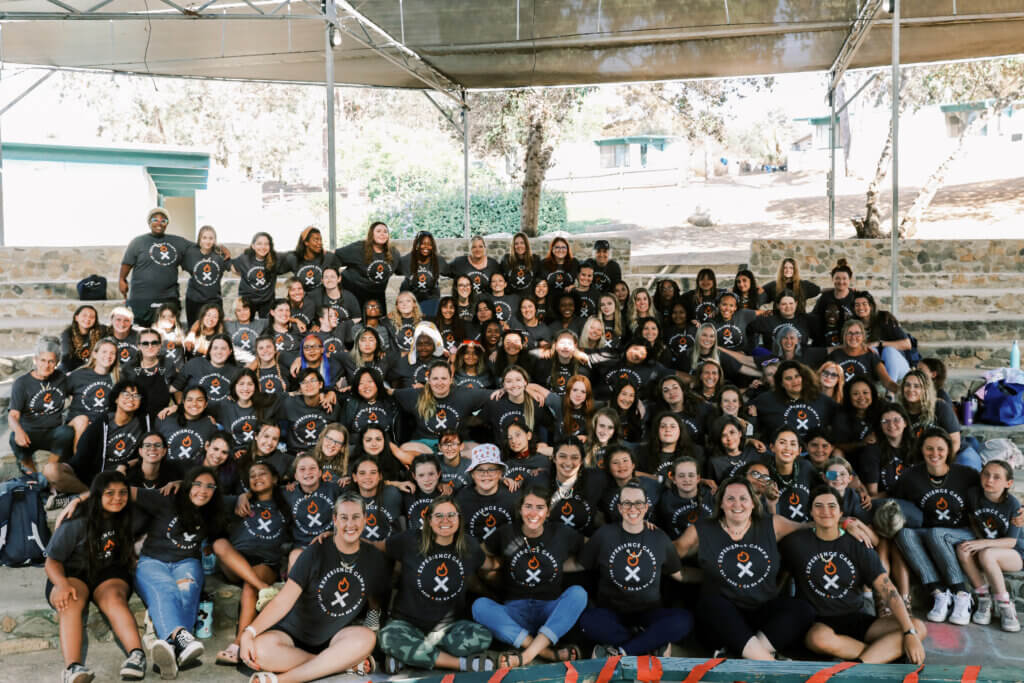
First, allow me to introduce you to this amazing nonprofit: Experience Camps is a national organization that provides free, one-week summer camps for kids who have experienced the death of a parent, sibling, or primary caregiver. They are magical places where children get to be surrounded by peers that understand what they are going through and don’t contort their faces when the word “death” is mentioned. It is a place of healing, crying, fun, laughter, s’mores, and of being a kid.
Experience Camps’ volunteers bring the energy, empathy, and fun to the week – all of which they possess naturally. Though the energy and empathy are exactly what the campers need, volunteers are also provided with asynchronous and synchronous training prior to arriving at camp and then in-person orientation to ensure they are ready and feel comfortable to be a counselor and mentor. This preparation leads to organically-formed relationships between volunteers and their campers; these kids naturally look up to counselors as role models. Both volunteers and campers return year after year which deepens the relationship at camp, however, many have the additional opportunity during the rest of the year to connect online and in person at reunions and other camper events that are facilitated by Experience Camps.
Now, let’s break the five biggest myths about volunteering at a grief-based organization for young people. The reason I know that they are myths is because I’ve worked at this organization and been a program director for one of our camps for 10 years and want to make sure that the following myths don’t prevent people from volunteering.
The 5 Myths of Volunteering for Grief Camp:
#1 – You have to be a “camp person.”
It’s true, being a volunteer means sleeping in a bunk, likely on a bunk bed, and participating in traditional summer camp activities (i.e., archery, arts & crafts, color war, etc.). However, prior camp experience as a child or counselor is not required. Oftentimes, being a total “newb” gives you something to talk about with the nervous campers who have also never been to camp before. Some of the most stellar volunteers self-identify as “non-camp people” who love volunteering the one week for Experience Camps. They enjoy the simplicity, being fed three meals a day (with dessert), and being a goofball with the kids just as much as those who grew up spending their summers in the woods.
#2 – You have to be a griever.
Similar to the belief that you have to be a “camp person,” people often think that they must have personal experience with a significant loss in order to volunteer for a grief camp. This is untrue. Are there many volunteers who are drawn to the mission because of their familiarity with death and grief? Of course. But, we want our campers to be able to spend time and build trust with adults who are there just because they care; in fact, they may leave camp believing they can trust more adults in the “real world” and end up sharing about their person’s death with their teacher or coach.
#3 – You have to be an expert on grief.
Nope. And also, is anyone ever really an “expert?” You just have to show up for the kids (#FTK) and listen to their story. The most common worry I hear from volunteers prior to camp is that they won’t know what to say to their campers when they talk about the person or people who have died, and the most common response (whether comforting or frustrating) is, “that’s ok!” Silent nodding is sometimes exactly what is needed when a child is sharing about their person who died; it shows they are cared for, are listened to, and that their story matters and should take up space. (Note: volunteers do receive training from masters-level clinicians with some guidelines on what and what not to say surrounding grief.)
#4 – Grief camp is sad and depressing.
This is my favorite myth to debunk when I’m sharing about Experience Camps because it couldn’t be farther from the truth. Sure, when 10 campers are in a sharing circle saying their person’s name and sharing their memories about them there are tears shed and tissues passed, and yet, those same kids will be perfecting their cannonball at the pool minutes later. Children naturally oscillate between emotions, something that many adults grow out of, unfortunately. That’s why the equation grief + play = magic. These kids are surrounded by others who “get it,” get being the only student in class with a dead parent or sibling, understand that people think they should hurry up and move on, and know that their childhood was shortened by their loss. Yet, at grief camp, they get to reclaim that and be their authentic selves through silly camp games and camaraderie.
#5 – Healing is facilitated by clinicians only.
Though each bunk has an assigned grief specialist who guides the grief activities, they are not the keepers of healing. In fact, none of the adults at camp are. Campers are fantastic at providing each other with support, a hug, gentle questions, and understanding nods. They each have experiential wisdom and eagerly share it with their new best friends, and through these relationships born out of being members of this “club” they never wanted entrance to, healing happens.
Volunteering for an organization like Experience Camps is the only true way to understand these truths about grief camp. However, the more we talk about grief itself, the less taboo it becomes and the more grief-smart our society has the potential to be. Remember: kids don’t need you to have all the answers, they need you to show up authentically and simply care.
Liza Buck is the Regional Program Manager for Experience Camps for grieving children. She is entering her 10th year with Experience Camps, having started as a lifeguard, then volunteered as a bunk counselor, and most recently serving as California’s program director. She now works on the full-time team. Over the last 10 years, she has interviewed countless volunteers, debunking some of these myths and thought it was time to spread the word.