Discussing Race and Injustice in Difficult Times
All of us, but in particular our young people of color, have been plagued with feelings of anger, helplessness and despair in the face of national and local tragedies involving police violence against people of color. Paul O’Neal, Alton Sterling, Freddie Gray and others like them are in the media, and it’s difficult to find a voice to the confusion, sadness and rage that accompanies these highly visible and painfully corrosive incidents. Across the country, a movement to stop violence is inspiring a need for action and conversation. In order to support young people and ourselves as mentors, teachers, and community members, we need to begin real dialogue about these incidents and the underlying causes for them. We at MENTOR specifically have been asked if we have resources, guides, or other materials to help support mentors in sparking conversations about race and injustice. We have been working with our partners to coalesce as many materials and helpful guides as we can, but we know this is a complex topic that is often difficult for mentors to address with their mentees.
Sometimes we just need a way in that allows for comfort and trust to build. As a former reading, writing and literacy teacher, I had always infused voice, storytelling and expression through the use of literature and creative writing. Literature and storytelling can help us make sense of our surroundings, and situations, and make sense of complex issues. When I served as a high school equivalency teacher, most of my students were young people of color who had dropped out of high school for a countless number of reasons that mostly had to do with circumstances they could not control. They often returned to school with the hope that they could get a second chance and prove they were smarter and more capable than their previous school experiences had taught them. By providing material to consider and discuss, we can give young people the tools to critically reflect on their situations and make informed choices and decisions.
Personally, I find it difficult to know what to do with these stories and images plaguing the media. I certainly don’t profess to know the answers, but I have to ask: what do I have the power to do? I can open the door to conversation in order to make sense of the larger issues and be a support to others who are also struggling. If we believe we are in this together, then perhaps we have a chance at real change and healing.
While this strategy may or may not always be appropriate for or available to a mentor, I’d like to offer a list of suggested reading that mentors and mentees can read together and, if comfortable, use as a way to discuss issues related to race, power and violence. I came upon a list a librarian started that sparked the idea in me to write this blog post. Chelsea Couillard-Smith, a librarian for Hennepin County (MN) Library created this: http://www.slj.com/2016/07/books-media/librarian-creates-blacklivesmatter-booklist-for-teens/#_
For the purposes of this blog post, I highlight some titles from her list and include a few others that would be appropriate for anyone wanting to learn more about race, power and injustice, and hope that some of these titles would provide a way into a conversation with a young person you may support, mentor, and love. I invite you to share any other favorites you have in the comments field. I would love for this to be a lively, interactive discussion that will be a model for other discussions you might have.
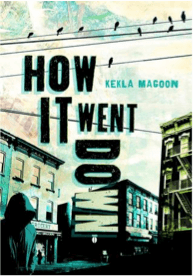
How It Went Down by Kekla Magoon
This is a timely young adult novel that focuses on the shooting death of a black teen by a white man. Through multiple character points of view, Magoon looks at the effects of a racially biased violent crime through a variety of lenses.
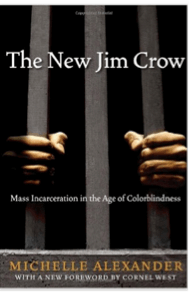
The New Jim Crow by Michelle Alexander
This is a very informative, eye-opening, non-fiction book by Michelle Alexander, a civil rights attorney, who describes how mass incarceration is a modern day Jim Crow. Written for adults, it can be a great source of discussion about race, law and incarceration with young adults too. I would recommend reading it first to gain comfort with the themes presented.
Punished by Victor M. Rios
Victor Rios grew up in Oakland, California in the 1980s and 90s. A former gang member and juvenile delinquent, Rios managed to escape the bleak outcome of many of his friends and earned a PhD at Berkeley and returned to his hometown to study how young Latino and African American boys develop their sense of self in the midst of crime and intense policing. Punished examines the difficult lives of these young men, who now face punitive policies in their schools, communities, and a world where they are constantly policed and stigmatized.
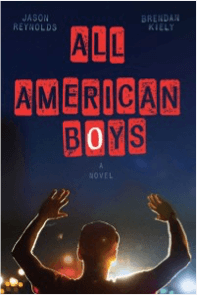
All American Boys by Jason Reynolds and Brandon Kiely
This young adult novel is a great discussion starter. It’s jointly written by Jason Reynolds and Brandon Kiely and follows the experiences of Rashad, a Black teen savagely beaten by a police officer, and Quinn, a White teen who witnessed the attack.
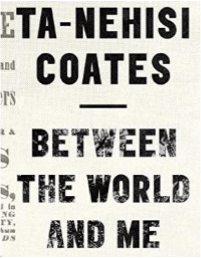
Between the World and Me by Ta-Nehesi Coates
This is a great book for adults and teens. Coates writes this book in the form of a letter to his son. He beautifully shares a father’s hope and fear for his son in light of a history of brutality against Black people in the United States.
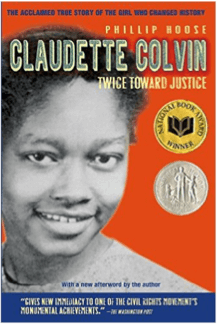
Claudette Colvin: Twice Toward Justice by Phillip M. Hoose
This is a great story to spark discussion around activism and change. Claudette Colvin was a teenager on March 2, 1955 when fed up with the daily injustices of Jim Crow segregation, refused to give her seat to a white woman on a segregated bus in Montgomery, Alabama. Instead of being celebrated as Rosa Parks would be just nine months later, fifteen-year-old Claudette Colvin found herself shunned by her classmates and dismissed by community leaders. Undaunted, a year later she dared to challenge segregation again as a key plaintiff in Browder v. Gayle, the landmark case that struck down the segregation laws of Montgomery and swept away the legal underpinnings of the Jim Crow South.
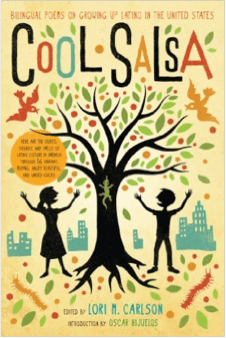
Cool Salsa: Bilingual Poems on Growing up Latino in the United States by Lori Marie Carlson
This is a compilation of poems about growing up Latino in America. While these poems don’t necessarily focus solely on issues of race, racism and injustice, they do provide insight into growing up learning the rules of two cultures.
How to Teach Kids About What is Happening in Ferguson
This is a crowd-sourced syllabus about race, African American history, civil rights, and policing. While it started as a response to what happened in Ferguson, much of it is relevant to where we are today. It also contains a lot more resources readings and information, if you have a desire to go deeper.