Road Recovery Develops Logic Model and Improves Mentoring Program Evaluation with Technical Assistance from MENTOR Virginia

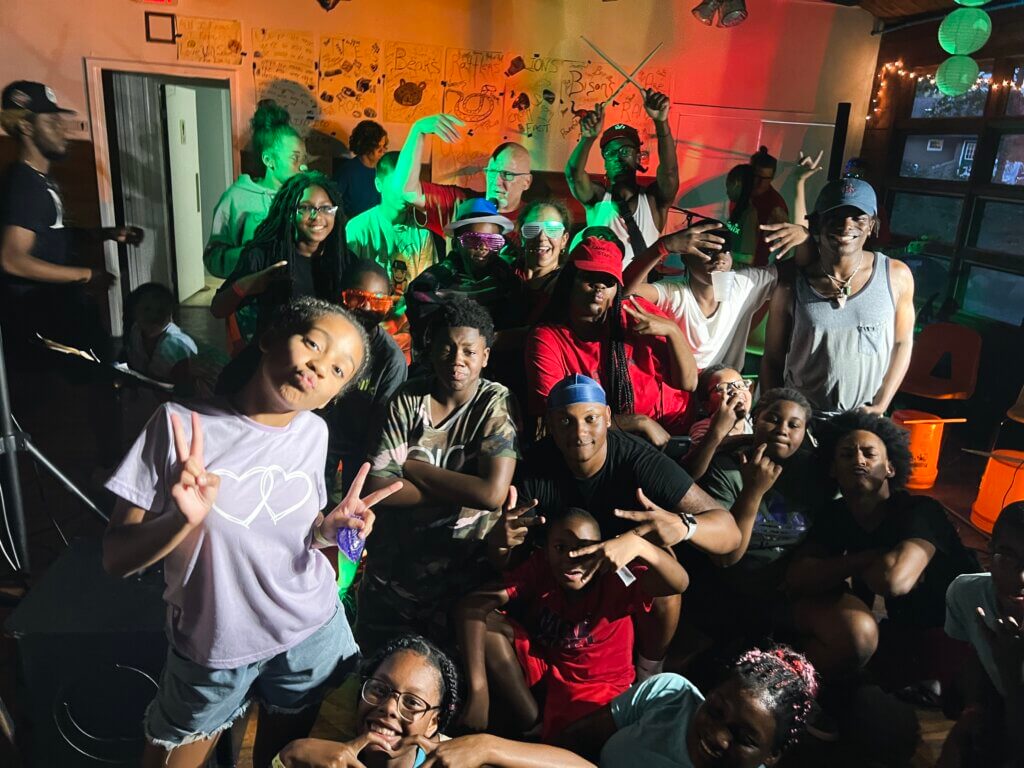
Road Recovery is an Office of Juvenile Justice Delinquency Prevention (OJJDP) grantee. Its mission is to empower young people to identify, express and amplify their voices in hopes of positively impacting themselves and a greater audience. Guided by music and entertainment industry professionals who have confronted similar life struggles, and with support from the mental health field, ROAD RECOVERY’s action-driven programs provide mentorship, performance workshops, and “all access” opportunities for a community of motivated peers to create and produce live concert events and studio recording projects.

After nearly 25 years of working in the mentoring field, Founder Gene Bowen requested the National Mentoring Resource Center’s no-cost technical assistance (TA) to identify ways to evaluate the effectiveness of their mentoring program. John Harris from MENTOR Virginia fulfilled Road Recovery’s request for TA. In the initial meeting with John, the Road Recovery team explained and explored the inner workings of their organization and mentoring program. They reviewed their program’s mission and asked questions that allowed for an in-depth look at all their mentoring practices and operations of their organization. This initial discussion led to the creation of a logic model that clearly and succinctly provided a useful overview of their mentoring program. Throughout the consulting process, John met and collaborated with the whole organization’s staff and active participants in the program, alums, and a clubhouse site director. All TA interaction ‘interviews’ were conducted virtually through the Zoom platform in one-on-one and group settings of no more than four participants at a time and, in some cases, via phone calls.
Both John and the Road Recovery team found these sessions of value. John states:
“I have found this TA challenging and rewarding, as I do with my best TA clients. Gene and the Road Recovery staff have presented me with unique problems to solve. They have done a fantastic job of engaging actively with the TA—they ask thoughtful questions and push back on anything they don’t understand or like. That kind of engagement gives me the best opportunity to help a client build a sustainable foundation for evaluation that will really meet their needs. It also forces me to learn and grow as a consultant, which I find immensely gratifying.”
With the support of John through the TA provided, the Road Recovery team was able to implement and improve upon the following:
- Mentors Staff Manual & Training
- Pre & Post Program Surveys/Data Collection
- Logic Model
- PowerPoint Presentation (a simplified version of our Logic Model for easier understanding of our mentoring work)
- Outcome Survey
- Dynamics Survey
- Intake Evaluation
- Program Site Scoring Tool
Gene and the Road Recovery team found their TA experience fruitful and expressed, “On behalf of the entire Road Recovery organization, WE are eternally grateful for the help, support, knowledge, and wisdom that has been so freely given to us by the OJJDP, The National Mentor Resource Center, MENTOR – New York, and especially MENTOR – Virginia.”

MENTOR partners with the U.S. Department of Justice, Office of Justice Programs, Office of Juvenile Justice and Delinquency Prevention (OJJDP) to deliver the National Mentoring Resource Center (NMRC) to the mentoring field. In addition to convening a Research Board which develops evidence-based reviews about mentoring topics, and offering a comprehensive mentoring resource center website, the NMRC provides mentoring programs nationwide with the opportunity to request and receive no-cost technical assistance to help them more deeply incorporate evidence-based practices into their programming. Once a mentoring program requests technical assistance, their request is assigned to a local or regional technical assistance provider within MENTOR’s network of state and local affiliates and TA providers. New and emerging mentoring programs may benefit from technical assistance to help them design and implement programs that meet quality standards as outlined in the Elements of Effective Practice for Mentoring™, while existing or established programs may utilize TA to improve operations, assess impact, or adapt their program to changing or emerging community needs.
Learn more about Road Recovery, and MENTOR Virginia. Submit a request for no-cost technical assistance for your youth mentoring program here.